Level 11
Drone Explorer
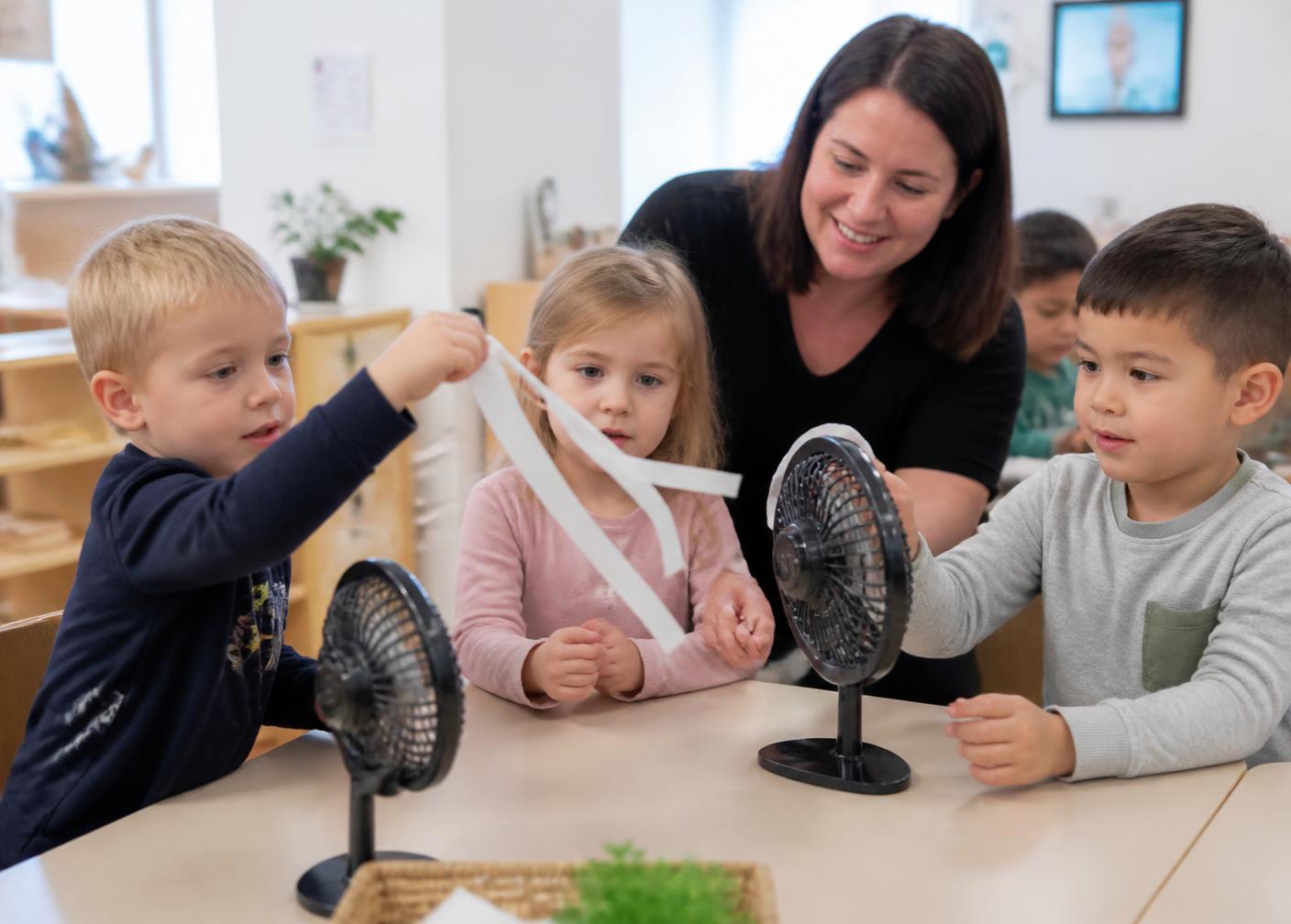
Children meet drones for the first time and explore flight, safety, movement and the science of flying through observation and guided experiments.
- What drones are
- How things fly
- Safety routines
- Movement & direction
STEMWORKS · Powered by DroneDash Technologies
12-Month Preschool STEM Programme · Screen-Free STEM
A 12-month, screen-free preschool STEM programme where children discover science, engineering, computational thinking and problem-solving through hands-on drone missions.
12
Months
48
Structured Lessons
K1 & K2
Age-Appropriate Tracks
100%
Screen-Free Learning
4
Achievement Levels
More than drone flying
Drones are a platform, not the point. Children use them to explore science, engineering, computational thinking, navigation, creativity and real-world problem-solving — with their hands, their bodies and each other.
Children are never asked to simply watch a drone fly. Each session sets a problem, and the drone becomes the reason to think it through carefully.
Every mission follows the same thinking cycle
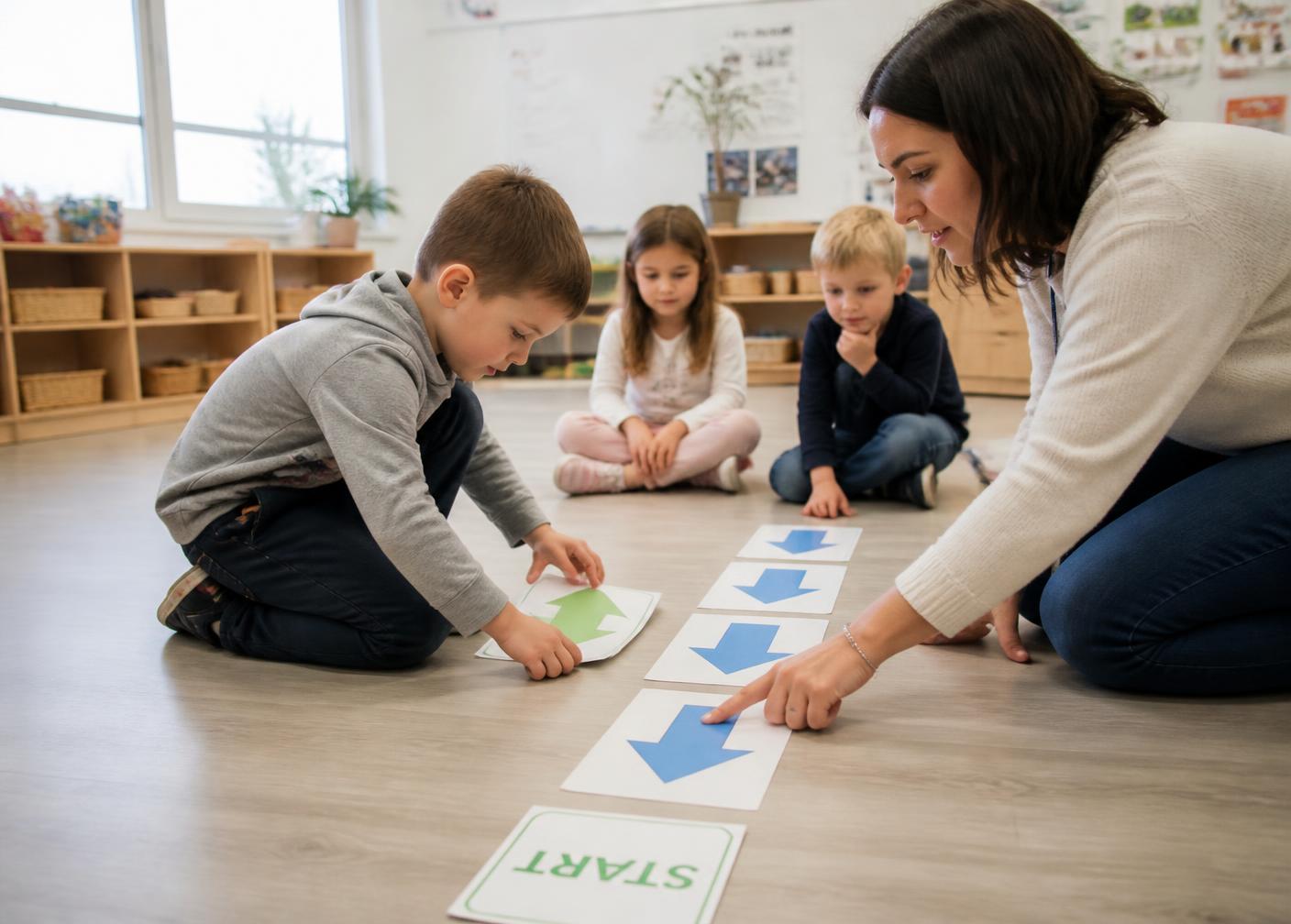
Example command sequence
Screen-free by design
Computational thinking starts long before a child needs a tablet.
No tablets, laptops or personal devices appear anywhere in the child-facing curriculum.
A full year of discovery
48 structured lessons across twelve months, sequenced so each level builds on the thinking developed in the one before.
Children meet drones for the first time and explore flight, safety, movement and the science of flying through observation and guided experiments.
Sequencing, algorithms, route planning and debugging are introduced entirely through physical activities, command cards and floor-grid missions.
Children apply their thinking to real-world scenarios: agriculture, rescue, navigation and delivery missions with increasing complexity.
Engineering thinking comes to the front: frames, sensors, cameras, age-appropriate AI concepts, design decisions and innovation challenges.
Real technology. Real missions.
Mission themes are drawn from how drones are genuinely used — then translated into age-appropriate, hands-on classroom challenges.
Children plan flight routes over farm plots, observe crops and decide which areas need attention.
Search patterns, obstacles and no-fly zones turn problem-solving into a purposeful team mission.
Packages, addresses and efficient routes introduce sequencing, counting and spatial reasoning.
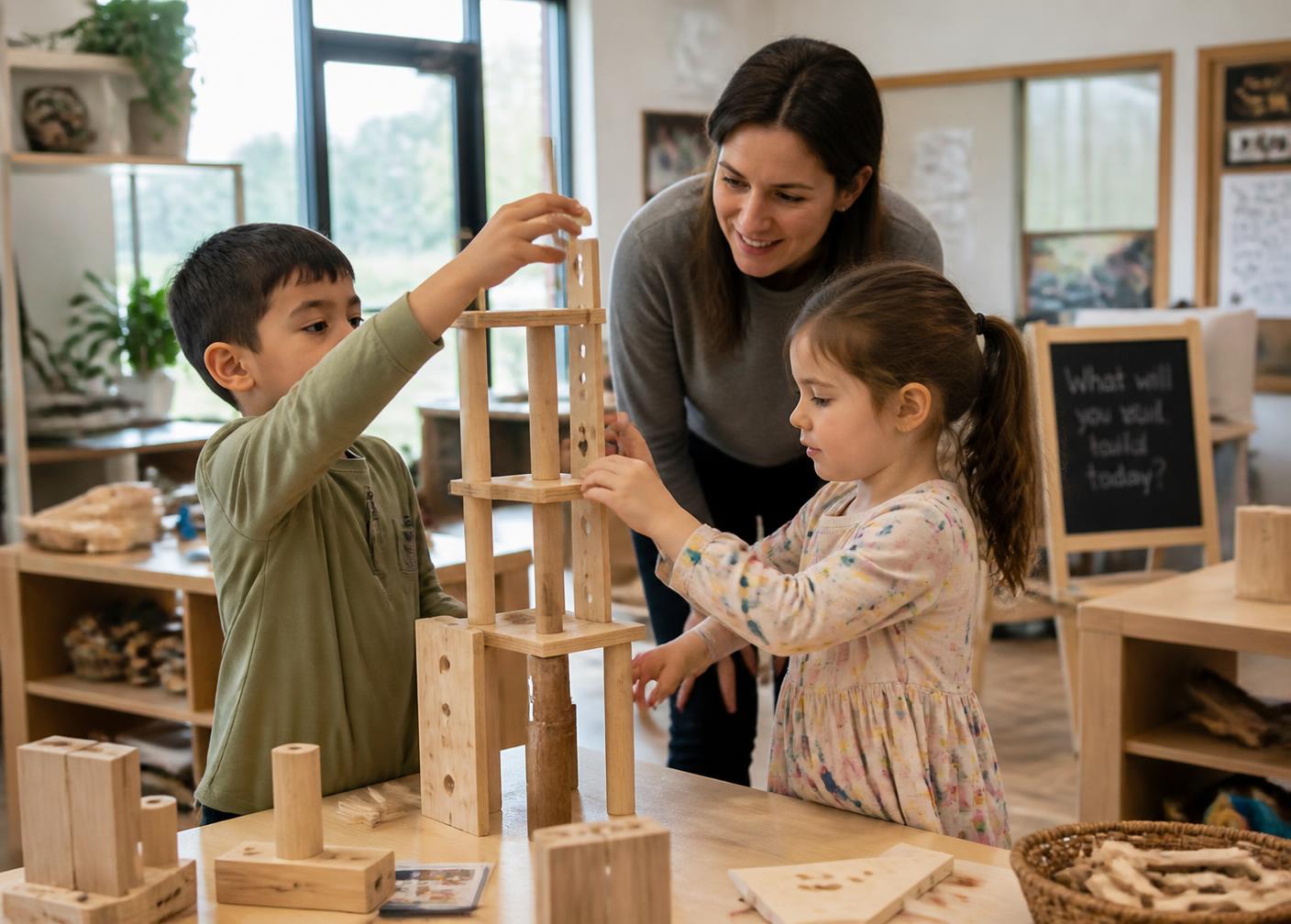
Frames, propellers and structures show why design choices change how something performs.
Children explore how machines gather information about the world, and what they do with it.
Age-appropriate discussions about how machines follow rules, spot patterns and make decisions.
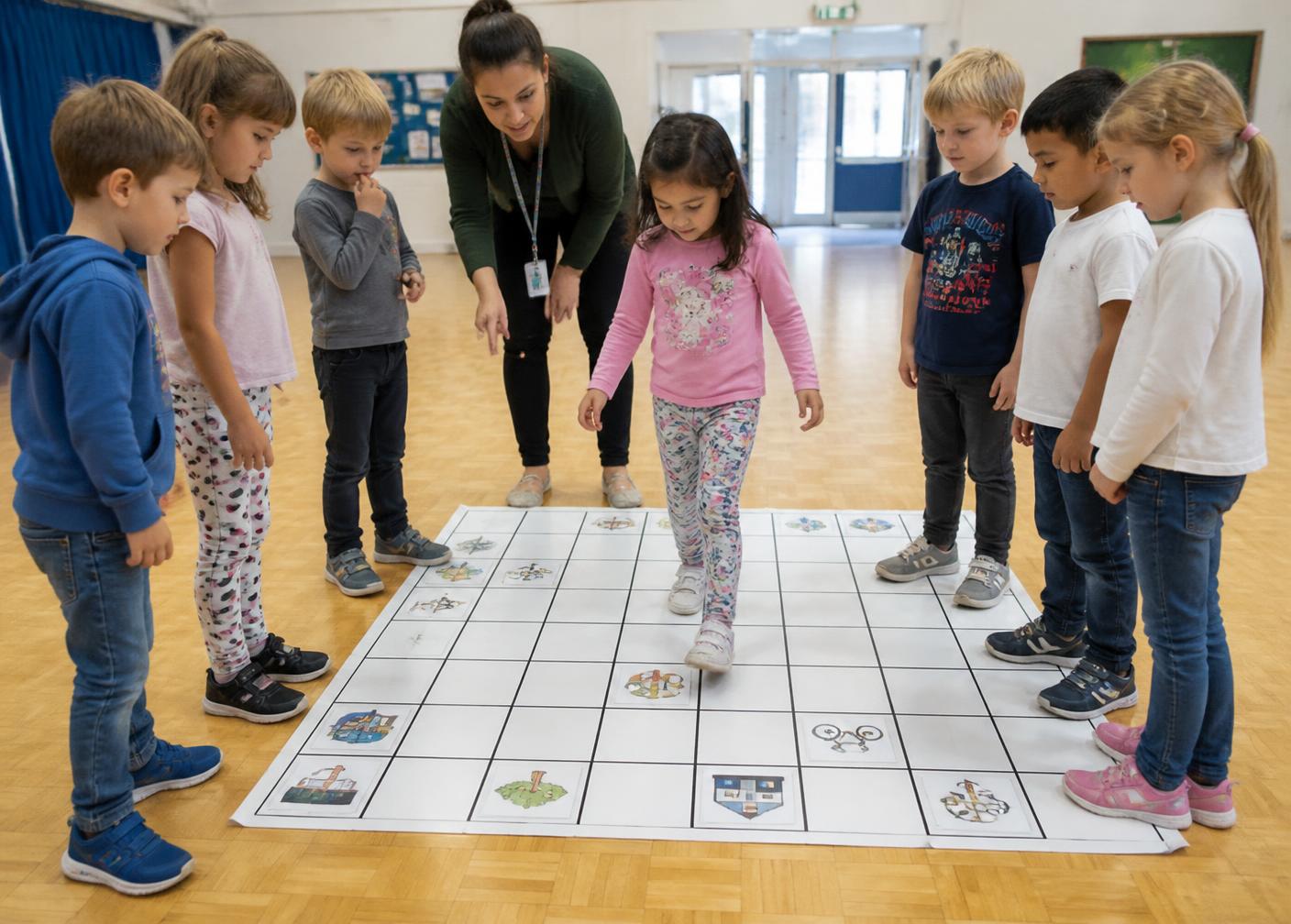
Sample mission
A Level 2 mission that shows how computational thinking is taught without a single screen.
The team studies the grid: a landing pad, a river, trees, a no-fly zone and the puppy waiting to be found. Together they lay out a sequence of command cards.
One child becomes the human drone and follows the sequence exactly — one card, one step. The rest of the team calls out each command.
The route lands in the river. Children discuss what happened, find the card that caused it and change the sequence.
The team runs the mission again with a better plan, then looks for a shorter or safer route.
This is computational thinking — without a screen.
Skills that go beyond drones
STEMWORKS is designed to support the thinking habits that matter in every subject — and in everyday life.
Introduces sequencing, decomposition, pattern recognition and debugging through physical activity.
Provides opportunities to observe, predict and test ideas about air, movement and forces.
Encourages children to build, adjust and rebuild — and to notice why a change made a difference.
Supports understanding of direction, distance, position and orientation on grids and maps.
Introduces counting steps, comparing routes, measuring and simple estimation in context.
Provides structured opportunities to face a challenge, try an approach and adapt it.
Encourages children to explain their thinking, give clear instructions and listen carefully.
Supports turn-taking, shared responsibility and working towards a common mission goal.
Invites children to imagine new missions, new designs and new solutions to open challenges.
Encourages children to try, adjust and try again in a supportive, low-pressure setting.
Designed for how young children learn
Every lesson is built around how preschool children actually make sense of the world.
Every activity has a learning intention behind the fun.
Children learn direction and sequence with their whole bodies.
Real materials children can hold, arrange and rearrange.
Missions give children a reason to care about solving the problem.
Predict, try, observe and discuss what actually happened.
Small groups plan together and share the outcome.
Concepts return across the year in new, richer contexts.
Difficulty is matched to K1 and K2 readiness.
Short guided conversations help children name what they learnt.
Shorter sequences, more guided demonstration, sensory exploration and lots of movement. The emphasis is on curiosity, vocabulary and safe routines.
Longer sequences, independent planning within small teams, structured debugging conversations and early engineering and design challenges.
The programme has been designed with reference to relevant principles within Singapore's Nurturing Early Learners framework.
Programme format
12
Months
48
Structured Lessons
45 min
Typical Lesson
4
Learning Levels
K1–K2
Age-Appropriate Tracks
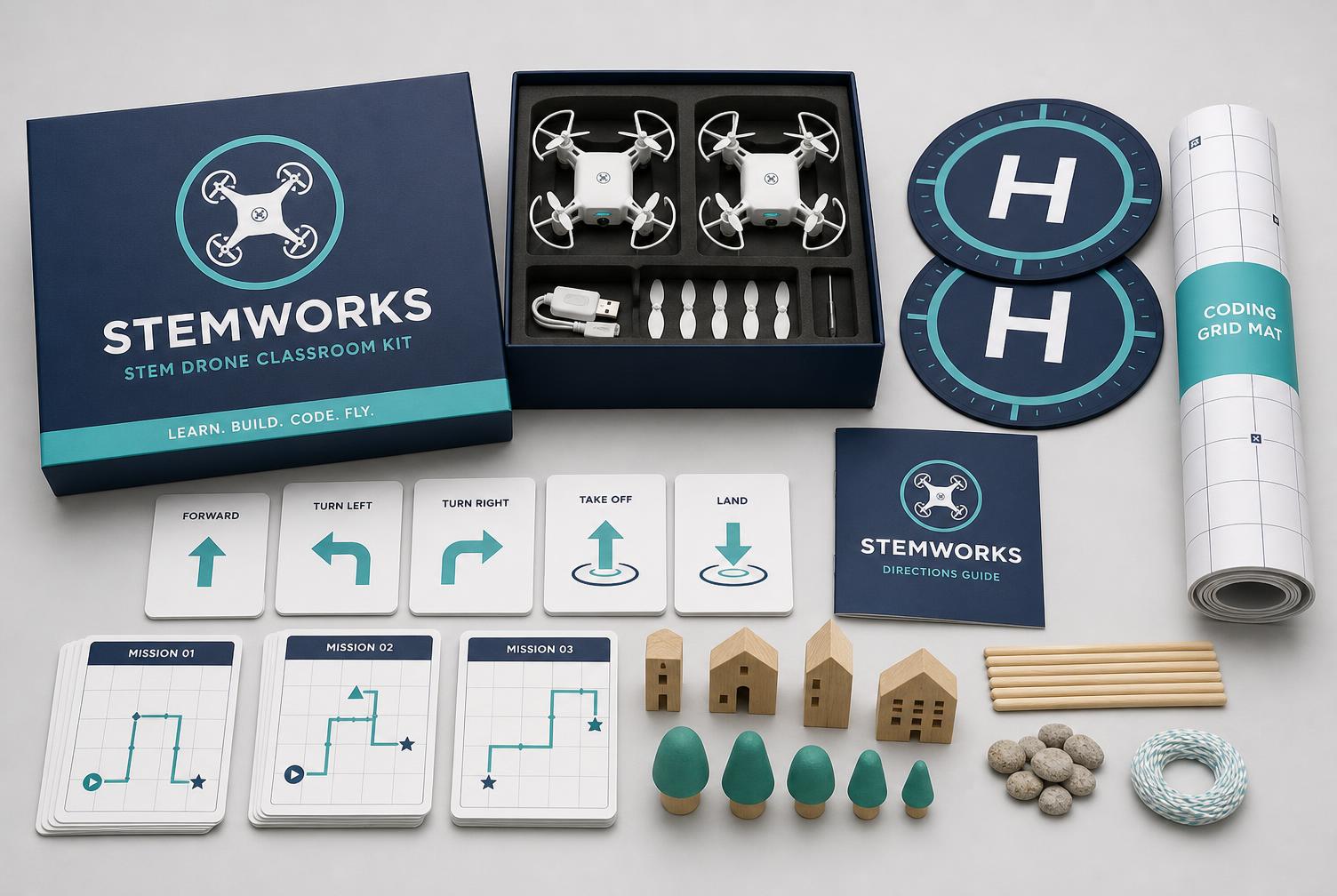
The classroom kit
Everything the programme needs arrives as physical classroom equipment — and not a single device.
Exact equipment configuration may vary depending on programme implementation.
Achievement journey
Recognition is built around encouragement, participation and development rather than academic grading.
Recognises drones, flight ideas and safety routines.
Plans, tests and corrects physical command sequences.
Applies thinking to real-world mission scenarios.
Explores design, sensors and innovation challenges.
Awarded at the close of the 12-month journey. Recognition focuses on participation, effort and development across the year rather than academic grading.
For preschool principals
STEMWORKS gives preschool operators a structured way to introduce emerging technology and STEM concepts without increasing children's personal screen exposure.
48 lessons sequenced across four learning levels.
No tablets, laptops or personal devices in child-facing activities.
Two age-appropriate tracks from the same curriculum spine.
Physical materials, grids, missions and building challenges.
Lesson plans, mission cards and classroom guidance.
A consistent structure for how each session runs.
Equipment and mission materials supplied for classroom delivery.
Clear explanations of what children are learning and why.
Simple, developmentally appropriate observation prompts.
Four levels leading to a closing certificate.
For parents
Children think they are completing a rescue, farm or delivery mission. What they are practising is planning, sequencing, communication, observation, teamwork and problem-solving.
How a mission actually unfolds
When a plan doesn't work, children are guided to look for the reason, adjust the sequence and try again — calmly, together, and without pressure.
Read the parent guide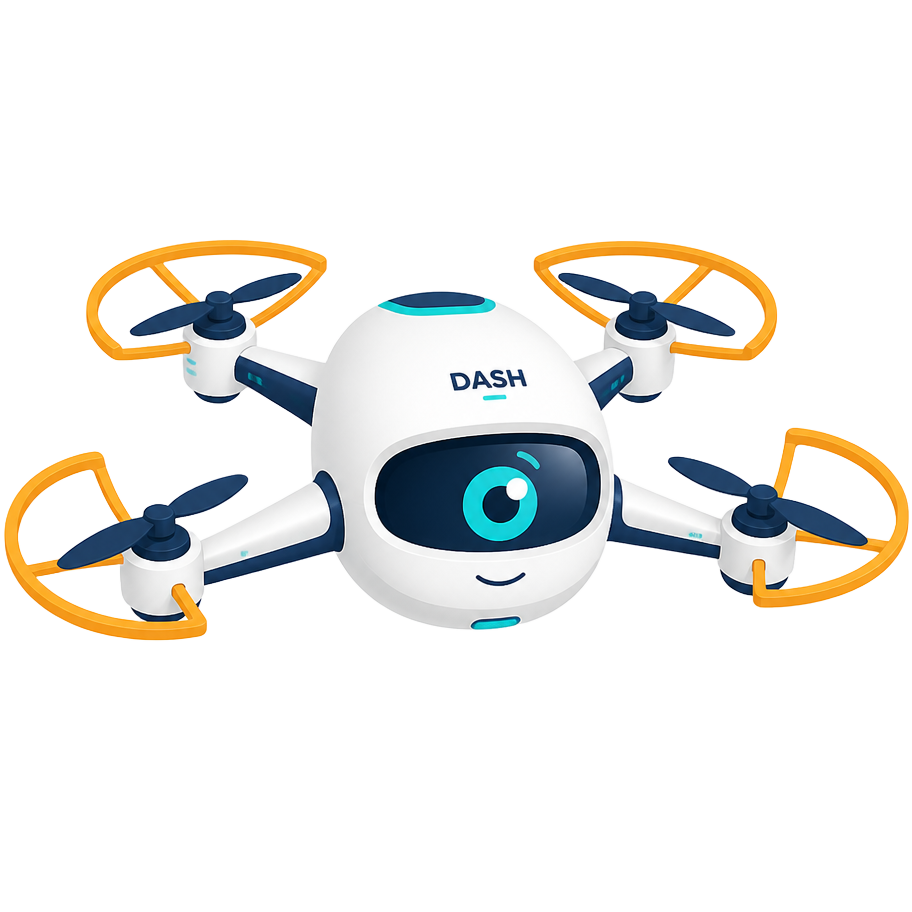
Meet Dash
Dash is the friendly guide who introduces each mission to the children — asking questions, setting challenges and cheering on second attempts.
Why drones?
A drone touches almost every strand of early STEM at once — which makes it an unusually efficient teaching platform.
About DroneDash Technologies
DroneDash Technologies works with drone technology across real-world applications. STEMWORKS brings that practical technology perspective into age-appropriate early-childhood STEM education.
Our aim is simple: help children understand that technology is not something they only consume. It is something they can understand, question, design and one day create.
More about DroneDash TechnologiesSchool enquiry
Tell us a little about your centre and we will send through programme information, delivery options and next steps.
The future will be built by curious minds.
Bring a year of hands-on, screen-free STEM discovery to your preschool.