Level 11
Drone Explorer
Children meet drones for the first time and explore flight, safety, movement and the science of flying through observation and guided experiments.
- What drones are
- How things fly
- Safety routines
- Movement & direction
The Programme
STEMWORKS is a structured educational programme delivered across 48 sessions and four learning levels. Drones are the platform; science, engineering and computational thinking are the content.
12
Months
48
Structured Lessons
45 min
Typical Lesson
4
Learning Levels
K1–K2
Age-Appropriate Tracks
Structure
Each level introduces new thinking, then revisits earlier concepts inside harder missions.
Children meet drones for the first time and explore flight, safety, movement and the science of flying through observation and guided experiments.
Sequencing, algorithms, route planning and debugging are introduced entirely through physical activities, command cards and floor-grid missions.
Children apply their thinking to real-world scenarios: agriculture, rescue, navigation and delivery missions with increasing complexity.
Engineering thinking comes to the front: frames, sensors, cameras, age-appropriate AI concepts, design decisions and innovation challenges.
How a lesson runs
A typical 45-minute session moves through the same cycle, so children always know what kind of thinking is being asked of them.
A short circle time revisits the last mission and introduces today's challenge.
Hands-on investigation with real materials — no devices involved.
Small teams lay out command cards or map a route on the grid.
The plan is run, observed, discussed and corrected.
Children explain what changed and what they would try next time.
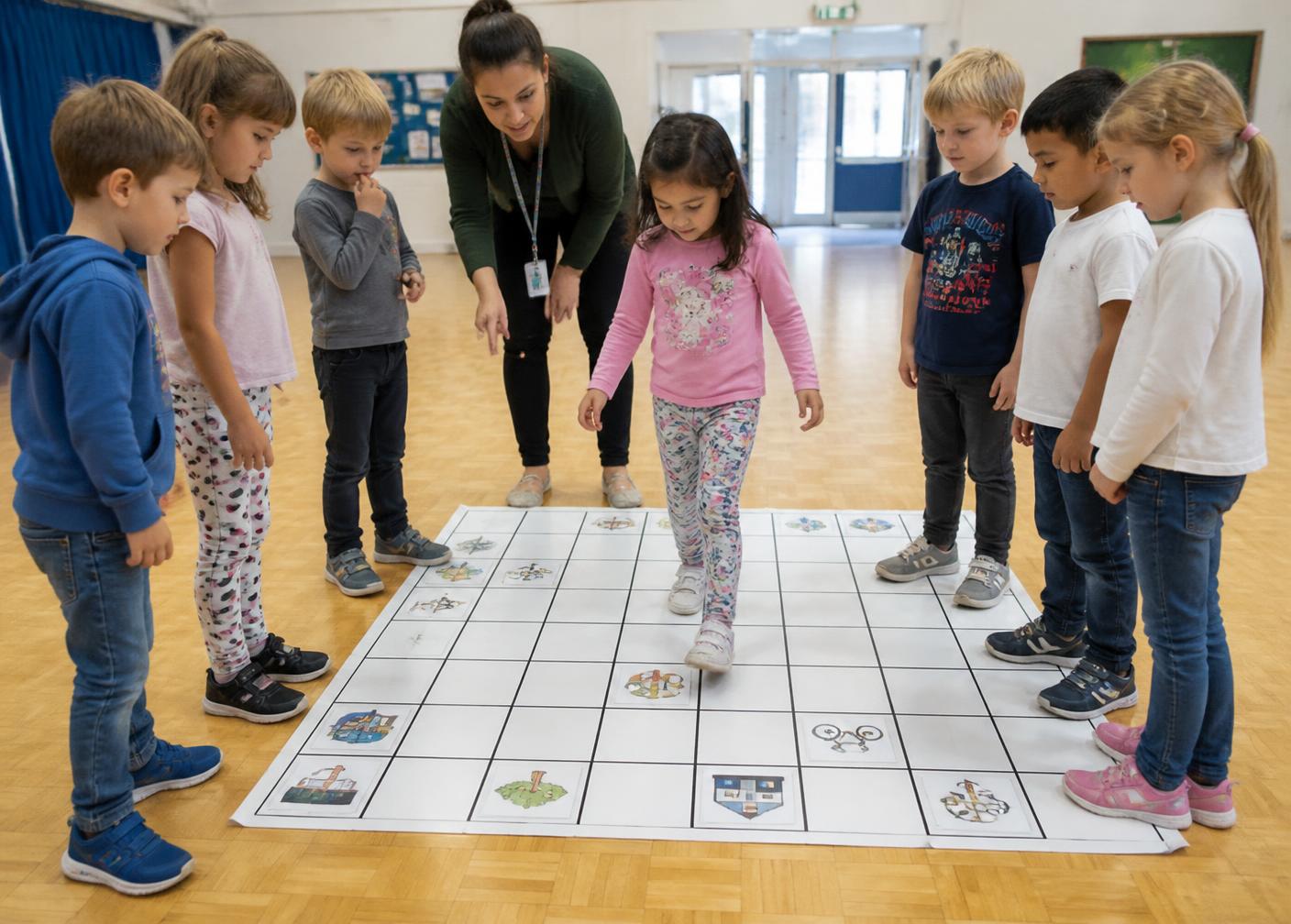
Screen-free command sequence
Sample mission
A Level 2 mission that shows how computational thinking is taught without a single screen.
The team studies the grid: a landing pad, a river, trees, a no-fly zone and the puppy waiting to be found. Together they lay out a sequence of command cards.
One child becomes the human drone and follows the sequence exactly — one card, one step. The rest of the team calls out each command.
The route lands in the river. Children discuss what happened, find the card that caused it and change the sequence.
The team runs the mission again with a better plan, then looks for a shorter or safer route.
This is computational thinking — without a screen.
Mission themes
Mission contexts are drawn from genuine drone applications, then rebuilt as age-appropriate classroom challenges.
Children plan flight routes over farm plots, observe crops and decide which areas need attention.
Search patterns, obstacles and no-fly zones turn problem-solving into a purposeful team mission.
Packages, addresses and efficient routes introduce sequencing, counting and spatial reasoning.
Frames, propellers and structures show why design choices change how something performs.
Children explore how machines gather information about the world, and what they do with it.
Age-appropriate discussions about how machines follow rules, spot patterns and make decisions.
K1 & K2
The same concepts are pitched differently so both year groups are challenged appropriately.
Shorter sequences, more guided demonstration, sensory exploration and lots of movement. The emphasis is on curiosity, vocabulary and safe routines.
Longer sequences, independent planning within small teams, structured debugging conversations and early engineering and design challenges.
The programme has been designed with reference to relevant principles within Singapore's Nurturing Early Learners framework.
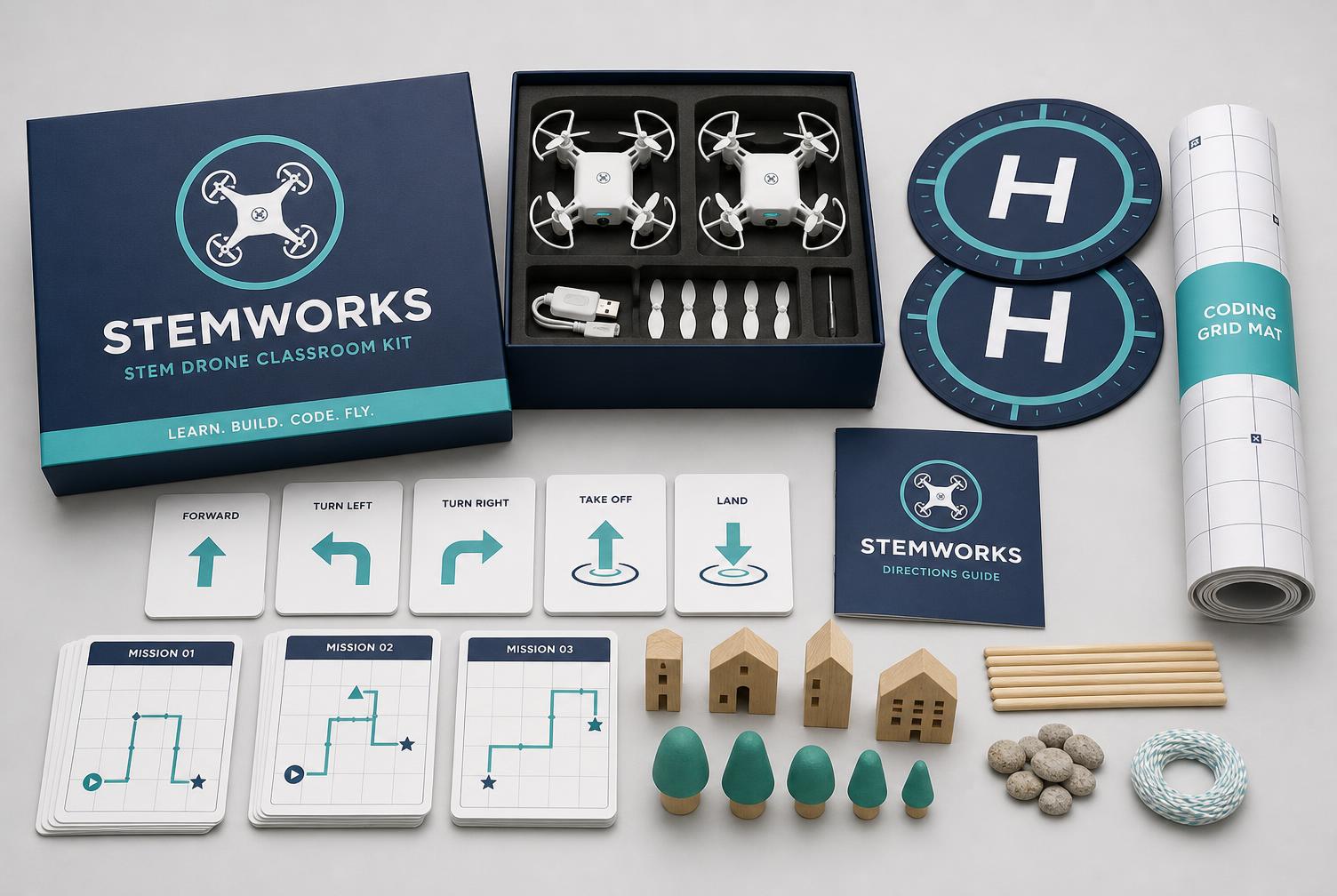
What's included
Exact equipment configuration may vary depending on programme implementation.
Safety
Every element of STEMWORKS is designed to support safe, controlled classroom delivery in a preschool environment.
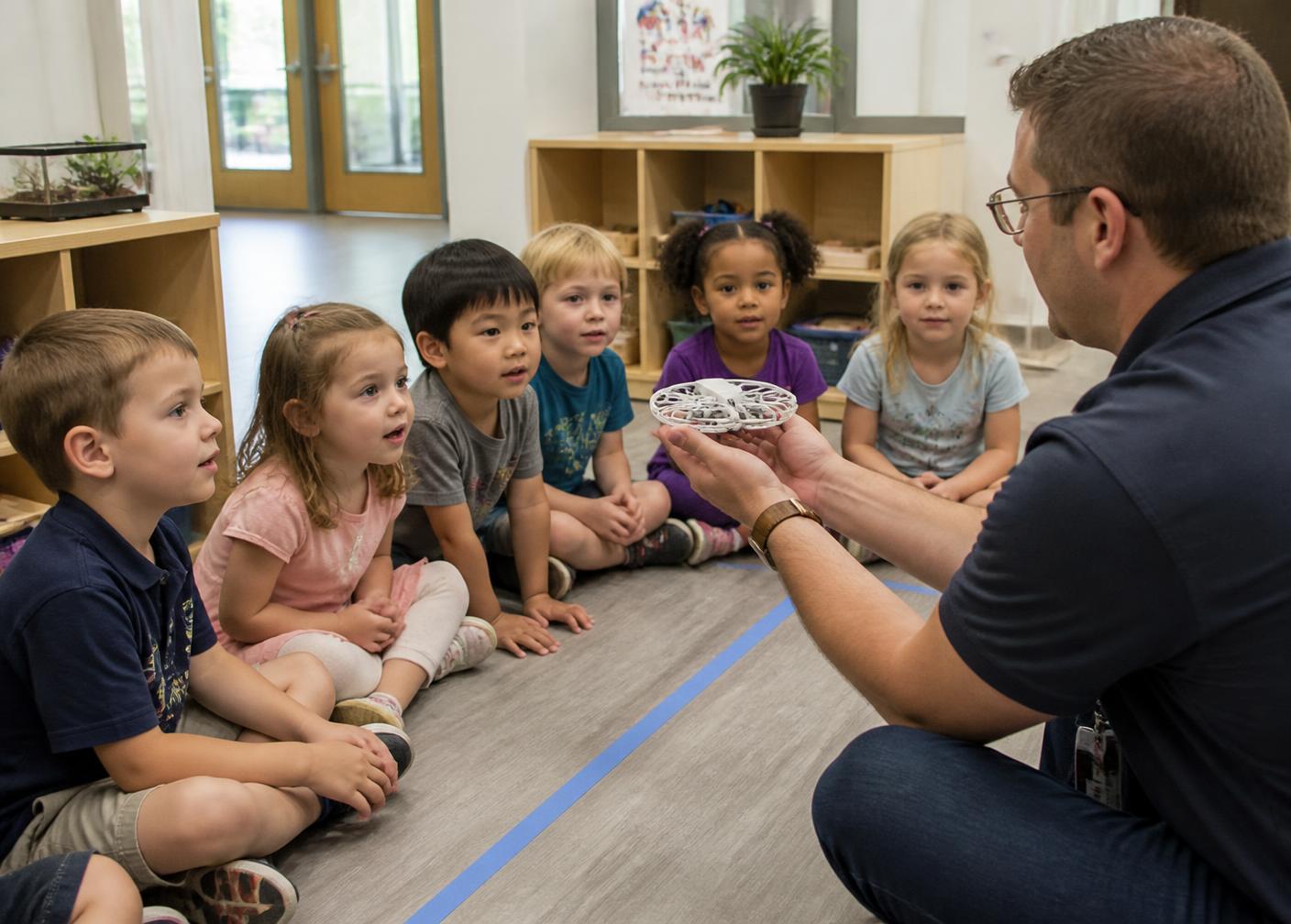
The future will be built by curious minds.
Bring a year of hands-on, screen-free STEM discovery to your preschool.